Who Were the Typical Proponenets of Art Music and What Did They Value
The Value Scale
Below is a scale of values ranging from one to 9:

The number of values between white and blackness are actually infinite, however for simplicity artists prefer to reduce the range to a scale of ane to 9 or ten.
All the colors in your painting tin exist placed at some point on this scale.
You lot do not need to utilize all values in this scale. Many artists prefer to use simply a limited value range, which can promote harmony in the painting. We will discuss this later in this mail.
What Is The Relationship Between Value And Color
Every color has an underlying value somewhere between white and black.
Let's have a look at the human relationship between value and color by using the standard colour wheel below:

Color Wheel
At present here is the standard color bike with no actual color:

Colour Bike - Blackness And White
Find how different colors have different values. Not all colors are equal in terms of lite and dark.
Now for each of these colors you can have an individual value calibration, with tints all the way upwardly to white and shades all the manner down to black.
So as you can imagine, at that place are an space number of potential colors y'all could mix even with only a express palette.
Notice how many colors in the color bike have similar values, despite having very unlike hues. When placed next to each other these colors would have very little contrast in value and your eye may find it hard to place which color has more importance in your painting.
Value is a much more powerful structural chemical element in your paintings compared to the hues you employ. In fact, the hues y'all use accept petty importance in setting the structure of your paintings. That is not to say colour is not important. Color has an extremely powerful physiological importance in your paintings.
In the fauvism movement, artists like Henri Matisse recognized this and he would employ wildly inaccurate hues, but the values were generally correct and his paintings notwithstanding looked somewhat realistic.
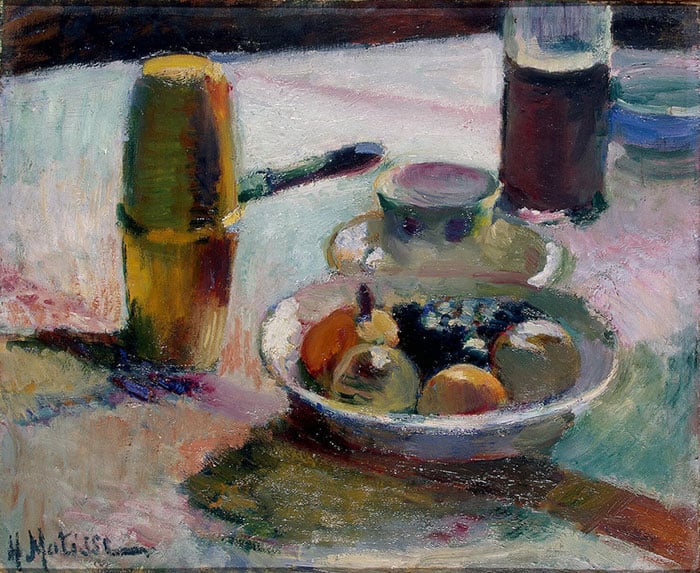
Henri Matisse, Fruit and Coffeepot, 1898
I will demonstrate how value can completely set up the construction of a painting regardless of color using the post-obit painting past Claude Monet:
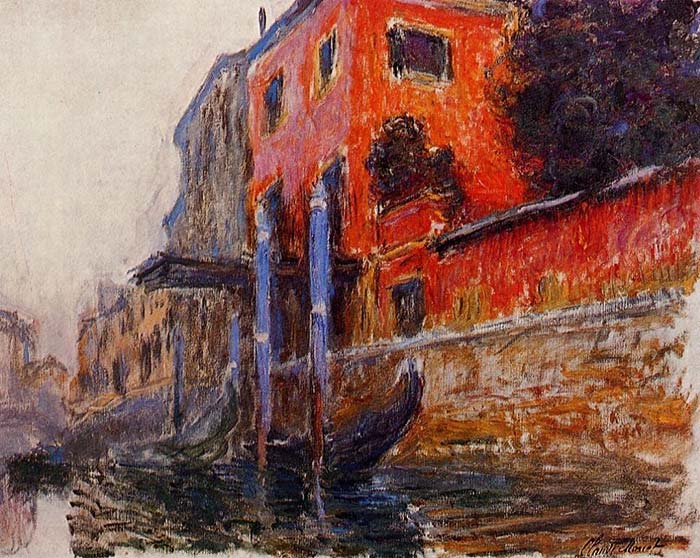
Claude Monet, The Cherry-red House, 1908
Now let's accept out all the color from the painting.
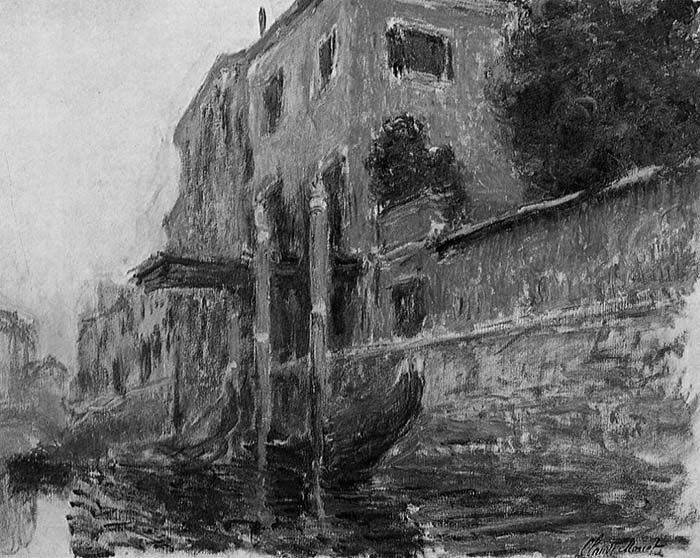
Claude Monet, The Red House, 1908
Every bit you tin see, Monet's values are all truthful and the structure of the painting is fix using these values. The colors take a much more than emotional importance in the painting, rather than structural.
If Monet did not employ accurate values and tried to differentiate the different objects using simply colors, shapes and lines so information technology would probably look like an abstract painting with very lilliputian direction.
This is why many oil painters kickoff with an nether painting of expressionless color just to gear up out the different values. They then add color on top of that.
Express Value Ranges
As noted earlier, many artists adopt to utilize a limited range of values in their artworks. This tin can help promote harmony in the artworks, equally it is easier to retain a level of consistency with just a limited value range.
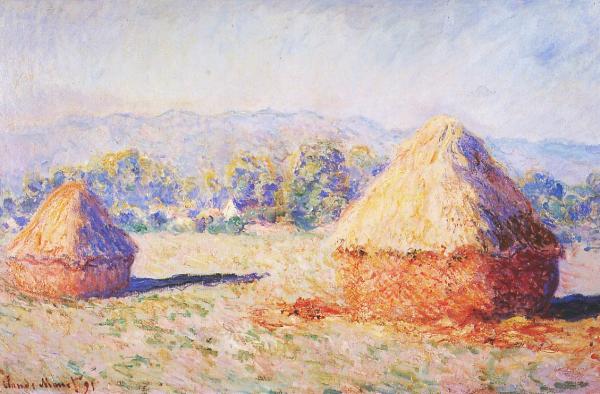
Grainstacks in the Sunlight, Morning Effect, 1890, Claude Monet
Claude Monet used a very high key value range in many of his paintings (a limited range of high values).
This tin can produce an almost glimmering effect and is perfect for bright, glaring scenes.
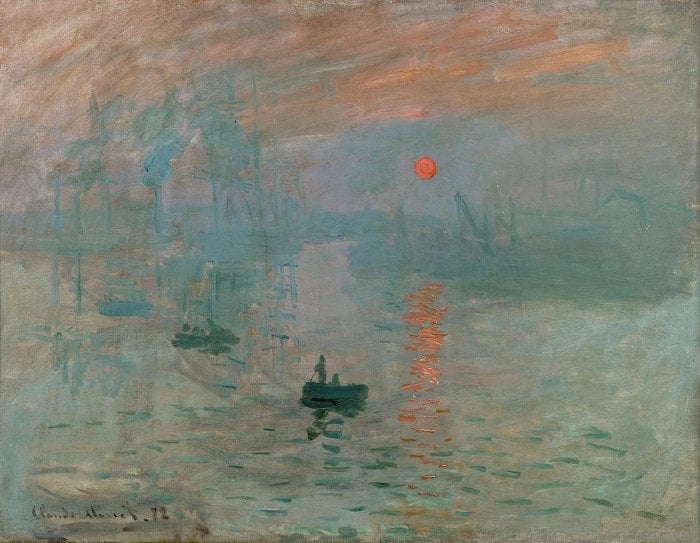
Claude Monet, Impression, soleil levant, 1872
In Claude Monet's painting Impression, he uses a express range of mid values, apart from the closest gunkhole which is considerably darker in value (this produces a very strong contrast).
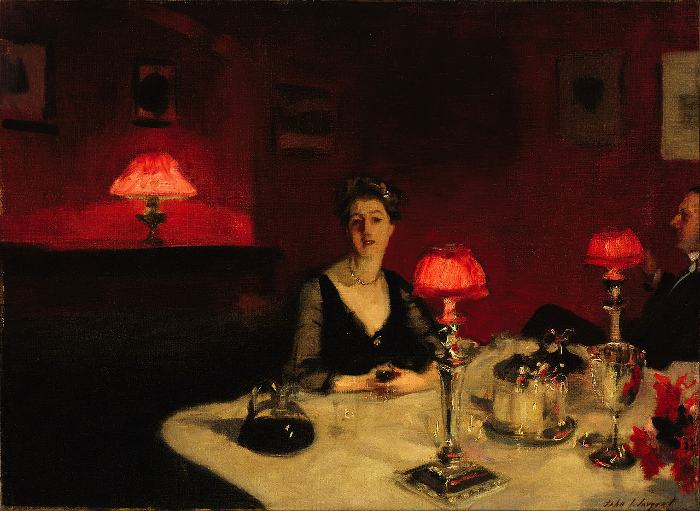
John Sargent, A Dinner Tabular array at Dark, 1884, De Young Museum, San Francisco, CA
In the painting in a higher place by John Sargent, a suitably low value range is used to portray this warm interior scene.
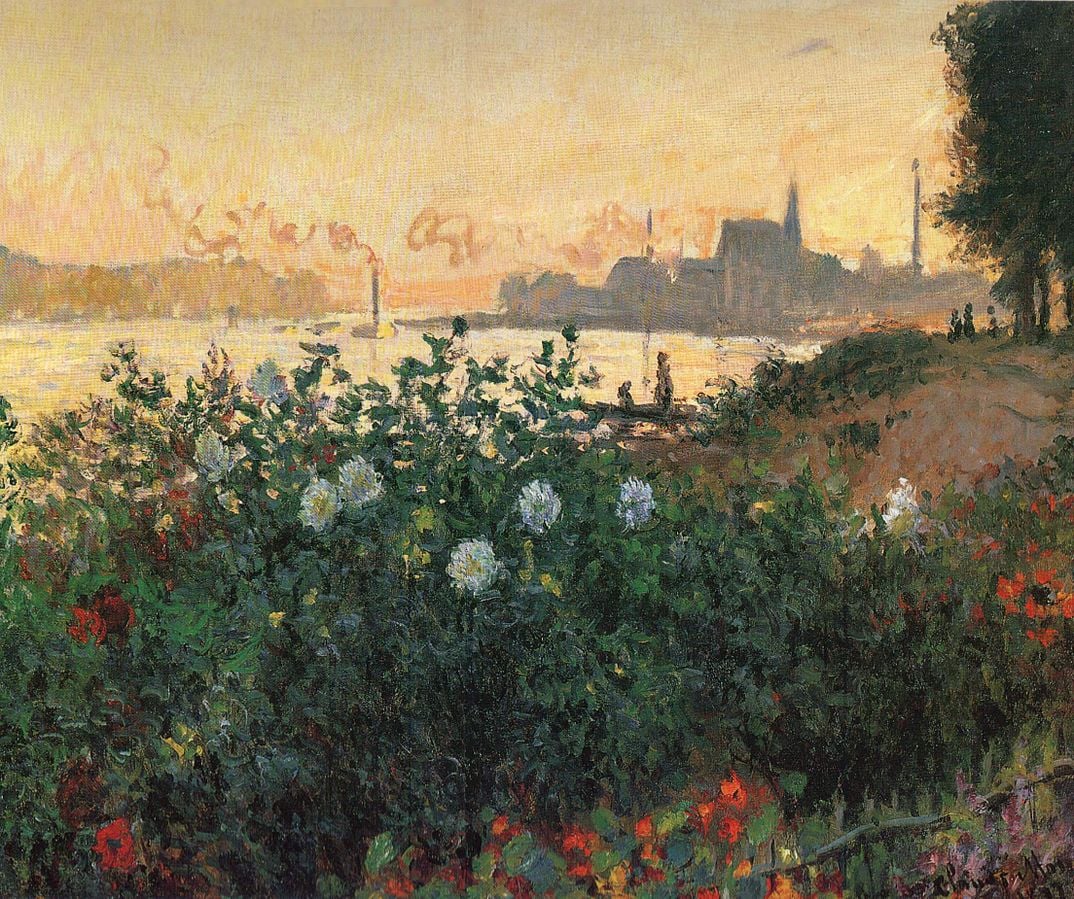
Claude Monet, Flowered Riverbank, Argenteuil, 1877
Claude Monet utilizes a much broader value range in the painting to a higher place, with brilliant yellows and oranges contrasting against the dark foreground area. To retain harmony in the painting, he seems to only utilise a limited number of hues in the painting (yellows, oranges, greens and reds). The result is an about glowing effect, with the potent contrast between the values.
How To Improve Your Understanding Of Value
The absolute best way to improve your understanding of value in fine art is to draw without color using charcoal and graphite. Cartoon takes away the complexity of color and forces you to think in terms of calorie-free and dark.
Once you lot are able to describe value, then all you need to practise is incorporate color.
If y'all endeavor to understand value without forming a solid knowledge base with cartoon, and so you may struggle to truly appreciate the importance of value (equally many seem to exist much more interested in the different hues).
This post is not a beat down on color. Colour is amazing and should exist fully appreciated. Nonetheless, in club to understand colour it is essential that you empathise value.
You tin read more about colour theory hither. Too, make certain to grab my gratis Color Theory Cheat Sheet.
Summary
I hope this postal service helps yous understand what value in fine art means and why it is and then important.
If you tin can chief the residue betwixt light and nighttime, then almost of the hard work is washed in your paintings. You have much more than lenience with your option of hues, provided your values are true.
A common trait among near of the swell artists of history is their mastery of value. Virtually of them placed a priority on mastering cartoon much before mastering painting.
If you accept any comments regarding value in fine art, please share them in the department below.
Want to Learn More?
I go into more detail on value in my Painting Academy course. More details here if interested.
Source: https://drawpaintacademy.com/what-is-value-in-art/
0 Response to "Who Were the Typical Proponenets of Art Music and What Did They Value"
Post a Comment